
Transforming Spaces Conference - 2003

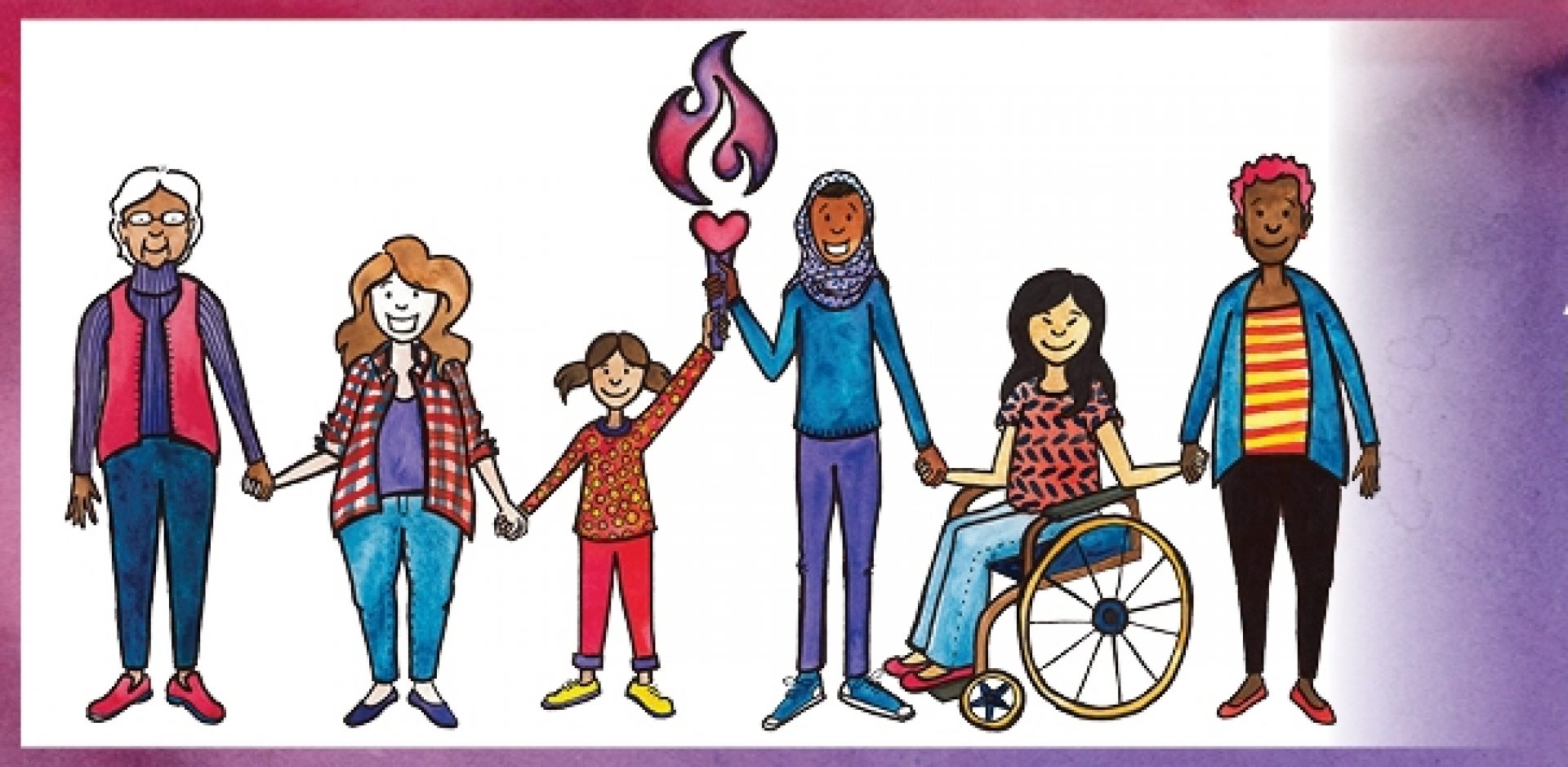
Transforming Spaces was a groundbreaking conference on girls and girlhood that was held in Montreal, Canada in November, 2003. It was the first of its kind in Canada. It brought together hundreds of girls and young women, community practitioners, grassroots activists, service providers, academics, educators and policy makers in a space devoted to communication, collaboration and change in the social realm.

The goal of this conference was to integrate a broad range of experiences with and approaches to “Transforming Spaces” and to address four inter-connected sub-themes: RESISTANCE, VIOLENCE, SEXUALITIES, and IDENTITIES as they relate specifically to young women and girls. The conference organizers put together a rich program using a wide range of formats to promote communication and exchange between and among conference participants. Included in the conference were: art exhibitions and performances (e.g., music, dance, theatre, and visual arts), poster presentations and community tables in addition to interactive workshops and paper presentations.

Here are some examples of nearly 100 presentations that were held over the 3 days of the conference:

  • Black Talk: Perceptions of African-Canadian Working-Class Girls and Their Social Relations in an Urban Middle School   
  • "Did You See What She Was Wearing?" The Power and Politics of Schoolgirl Style   
  • Girls and Young Women Negotiating Sexual Identities and Exploring Experiences of Reconstructing Agency   
  • Teen Girls Speak Out at the Library: Negotiating girls' identities inside and outside literature   
  • This is really hard life, who will save us? An in-depth examination of the normalization of violence against women in Africa: Kenyan experiences   
  • Preventing Violence Against Girls in Rural Atlantic Canada Communities: A Research Tool 
  • Brain Boosters for Creative Thinking   
  • Finding Native Beauty   
  • Girl Gangs


Conference Evaluation

Conference participants who responded to evaluations shared their positive impressions of the event. Ongoing challenges in bringing together such a diverse group of women of all ages, ethnicities, races, sexualities, class and educational and geographical backgrounds were also addressed in each phase of the conference, from beginning to end.

According to the evaluation, participants learned about:

  • Creating new opportunities for young women’s active and full social, political and economic participation in society 72%   
  • Increasing individual and community commitment to creating social justice 75%   
  • Preventing and eliminating violence in the lives of young women with a focus on the intersections of race, sexuality, gender, class and violence 75%   
  • Eliminating discriminatory barriers facing young women, particularly young women facing multiple barriers 67%


Policy Recommendations that came out of Transforming Spaces:

  • Increase funding and access to funds for grassroots organizations and young women doing work with girls   
  • Foster young women’s active participation in planning and organizing at the community and national level   
  • Support young women and girls’ own efforts to self-organize at the community and national level   
  • Support the sustainability and capacity of grassroots organizations and young women doing work with girls on key issues   
  • Provide spaces for girls under 18 who are engaged in organizing gender specific programs or activities   
  • Create opportunities for exchange of learning, skills and resources across communities, specifically for grassroots organizations and young women working with girls   
  • Support the organizational development and capacity building of grassroots organizations and young women working with girls in key issue areas   
  • Increase community networking and regional support for grassroots organizations and young women working with girls   
  • Create opportunities to advance understanding, awareness and skills necessary to work across differences and locations including age, race, class, ability, sexual orientation and gender identity   
  • Advance understanding and actions related to transgendered people   
  • Increase support for teachers working from a feminist approach in schools   
  • Provide the opportunity for intergenerational dialogue on key issues

*“I acknowledge how ‘old’ I am to be working with coming of age programs with teens. Elders need to be involved with young people—they are doing a wonderful job. What is the place for us older women?” “I am concerned about the sustainability of girls’ programs. We have to continue to defend the need for them and funding is hard to come by and hard to keep. I think we need to talk about ourselves as a movement and what we can do politically to claim more space for this essential work.” *What educators are saying… “I’ve learned that we need to ask questions, not impose our beliefs on people. What we do with young people - we talk, we give information. This has made me think about getting youth’s views, to think more on involving youth in planning”

To see the Transforming Spaces website, click here.